A used car can look perfect in the driveway and still be hiding a $3,000 problem. A pre-purchase inspection is how you find out before you hand over the money, not after. This guide covers what a good inspection checks, what it catches that a test drive will not, and why a full repair shop sees more than a quick look in a parking lot.
Here is the short version. A pre-purchase inspection is an independent check of a used car by a mechanic who works for you, not the seller. It tells you what is wrong, what is worn, and whether the car is worth the asking price. Even the Texas Department of Motor Vehicles tells buyers to have a trusted mechanic inspect the vehicle before signing anything or paying.
At Pit Pros Automotive on Inwood Road, a standard pre-purchase inspection is $199.95 and takes about an hour. You get a written findings checklist and a straight answer: looks good, buy with repairs factored in, or pass.
What Is a Pre-Purchase Inspection?
A pre-purchase inspection (often called a PPI) is a top-to-bottom look at a used vehicle before you buy it. The goal is simple: no surprises after the sale. In Texas, most used cars are sold as-is. Once you sign and pay, the problems are yours.
A good inspection answers three questions:
- Is it safe? Brakes, tires, steering, suspension and leaks.
- Is it honest? Does the car match what the seller and the history report say?
- What will it really cost? Repairs needed now, and repairs coming soon.
That last answer is your negotiating tool. A written list of needed repairs is the strongest reason a seller will come down on price.
What Our Pre-Purchase Inspection Checks
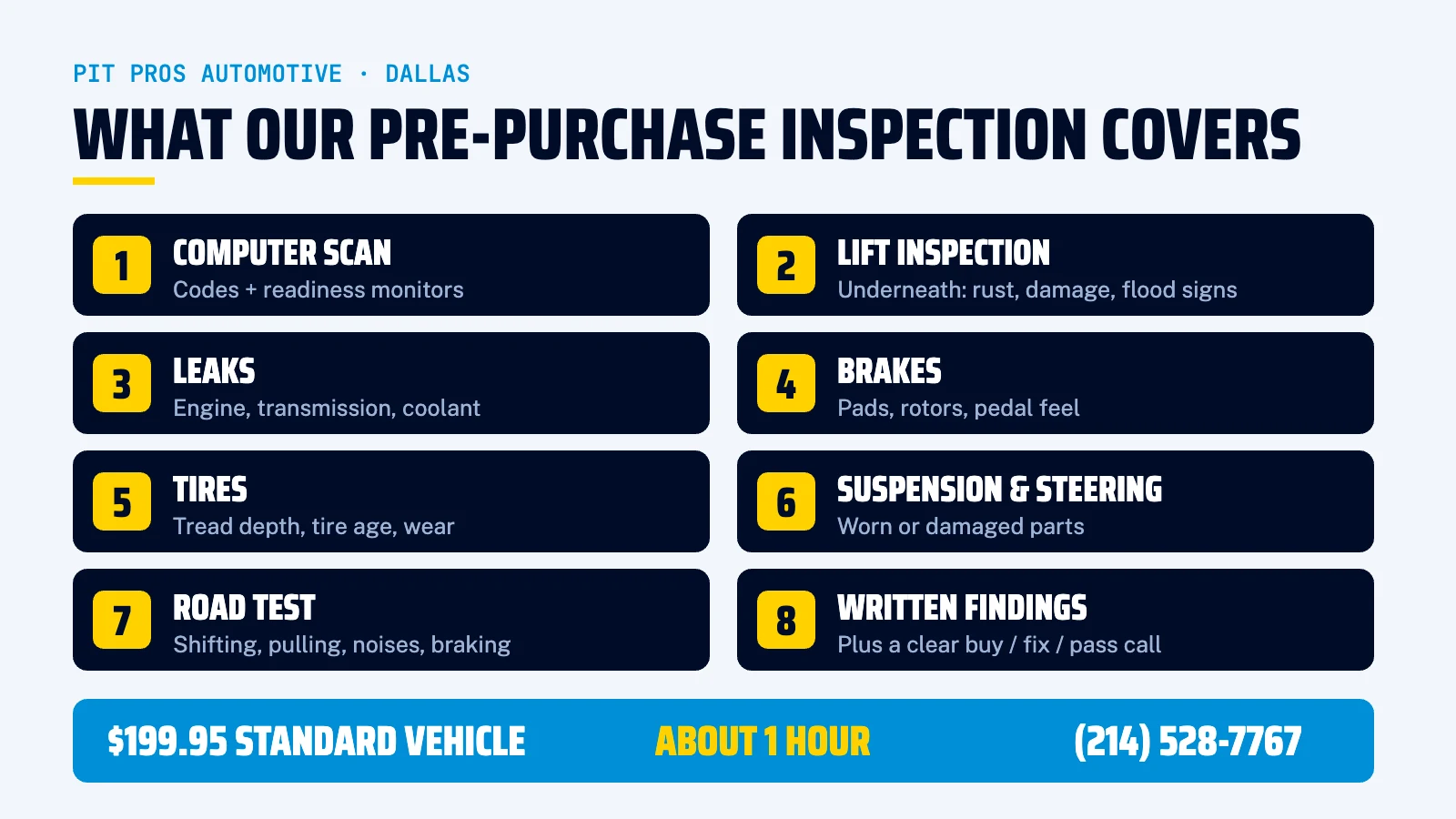
1. Computer Scan and Readiness Monitors
We plug into the car’s computer and read stored and pending trouble codes. Just as important, we check the readiness monitors. If the monitors show “not ready,” the codes were likely cleared recently, sometimes right before the sale to hide a check engine light. Learn more in our check engine light guide.
2. Lift Inspection Underneath the Car
This is where the expensive problems live: rusted or bent parts, damaged exhaust, signs of an accident repair, and signs of flood damage like silt, corrosion and rust in odd places. You cannot see any of this in a driveway. After storms on the Gulf Coast, flood cars often get cleaned up and resold in North Texas.
3. Leaks
We look for oil, transmission and coolant leaks. A small leak can be a cheap gasket or the first sign of a major repair, and it is a lot easier to find with the car in the air.
4. Brakes
We check pad and rotor condition and how the brakes feel on the road. Worn brakes are a common surprise after a used car purchase.
5. Tires
Tread depth, tire age and wear patterns. Uneven wear often points to alignment or suspension problems. A full set of tires can add hundreds of dollars to the real price of a car.
6. Suspension and Steering
Worn or damaged suspension and steering parts affect safety, ride and tire life. We check them up close on the lift.
7. Road Test
Our technician drives the car to check how it starts, shifts, steers and brakes, and listens for noises and vibration you might miss on a short test drive.
8. Written Findings and a Clear Recommendation
You get a written findings checklist and one of three clear calls:
- Looks good. No major issues found. Buy with confidence.
- Buy with repairs factored in. Problems found that are worth fixing. Use them to negotiate the price.
- Pass. The problems or red flags are not worth the risk.
The inspection reports the vehicle’s condition at the time we inspect it. It is not a warranty or a guarantee against future problems. If something needs deeper testing, such as a specific warning light, an A/C problem or an electrical issue, we quote additional diagnostics separately and only do them with your approval.
Why a Shop Inspection Beats a Quick Look in a Parking Lot
Mobile inspectors can be handy, but there is a limit to what anyone can see with a flashlight on the ground. At a full-service shop, the car goes up on a lift, and the technicians doing the inspection are the same people who fix these problems every day. When we flag a problem, we can also tell you what it typically takes to fix it.
Before the Inspection: Do These Free Checks First
- Run a title history report. TxDMV recommends a check through the National Motor Vehicle Title Information System (NMVTIS). It shows if a car was ever declared salvage, junk or a total loss. Reports start at a few dollars.
- Check for open recalls with the VIN on the NHTSA recall site.
- Match the VIN on the dash, door jamb and title, and make sure the name on the title matches the seller.
- Ask for service records. Regular oil changes and maintenance are a good sign. Our car service guide shows what should have been done by now.
After You Buy: Dallas County Paperwork
Texas gives you 30 days from the date of sale to transfer the title, or penalty fees may apply, according to TxDMV. Dallas County is an emissions county, so the car needs a passing emissions test before it can be registered. A car with a check engine light on, or too many “not ready” monitors, will fail. That is one more reason to have it scanned before you buy. See our Texas inspection guide for the current rules.
Red Flags That Mean Walk Away
- The seller will not let you take the car to a shop for an inspection.
- The title is not in the seller’s name, or the seller “does not have it yet.”
- Readiness monitors show the codes were just cleared.
- Signs of flood damage or a salvage or rebuilt title the seller did not mention.
- Major leaks, burnt transmission fluid or milky oil.
An honest seller with a good car has nothing to hide. If someone pushes back hard on an inspection, that tells you plenty.
Pre-Purchase Inspection in Dallas at Pit Pros Automotive
Pit Pros Automotive is a family-owned shop at 2802 Inwood Rd, Dallas, TX 75235, minutes from Love Field and the Medical District. We have worked on Dallas cars since 1986 and are a 6× CARFAX Top-Rated Service Center, 2020–2025.
Our standard pre-purchase inspection is $199.95 for a standard vehicle and takes about an hour. It includes a road test, computer scan, lift inspection, brakes, tires, suspension, leaks and a written findings checklist. Bring the car in yourself, or have the seller drop it off at the shop. Whether you are buying from a private seller or a dealer, we work for you.
Once it is yours, we also handle the Dallas County emissions test and any maintenance it needs. We are open Monday to Friday, 8:00 AM to 6:00 PM, and Saturday, 8:00 AM to 3:00 PM. Call (214) 528-7767 to schedule, or book online.